Map your one-person boundary: keep judgment, buy execution, let AI coordinate the seam
A boundary map for solo operators: keep final judgment, buy specialist execution, and let AI coordinate the seam.

You are deciding what to keep, what to pay out, and what to let software hold. The answer is a boundary you can set before adding revenue or complexity.
Mithril Medicine operated with a single full-time employee, relying on outside specialists and laboratories for additional work. The founder of Mithril Medicine, Cody Tranbarger, relied on Claude, an AI assistant, to manage the company's contracts, logistics, and experimental work spread over 11 outside laboratories.
A one-person boundary holds more
Anthropic, the AI company, made the Mithril Medicine acquisition public on October 27, 2026, even though the deal had closed in July 2026 and its financial terms remained undisclosed. The structure separates deciding, doing, and connecting: the operator decides, specialists do, and AI coordinates the seam.
Anthropic labeled Mithril's AI-supported operating model 'Pipeline-in-a-Person,' framing it as a structure in which a single scientist can supervise several drug research programs. Human scientists retained final decision-making in Mithril's process, choosing research targets and evaluating evidence.
The scientific result is the evidence behind the operating pattern. In a six-week study of mice with severe LAMA2-related muscular dystrophy, the highest antibody dose produced roughly twice the strength and muscle output of untreated animals; during the two-to-six-week period, four of the eight untreated mice died, compared with one of the eight treated mice.
Anthropic framed the Mithril deal as a way to learn where Claude has difficulty in drug development and to use those lessons to improve future models. The AI can help, but the boundary still belongs to the operator.
The handoff is where scale breaks
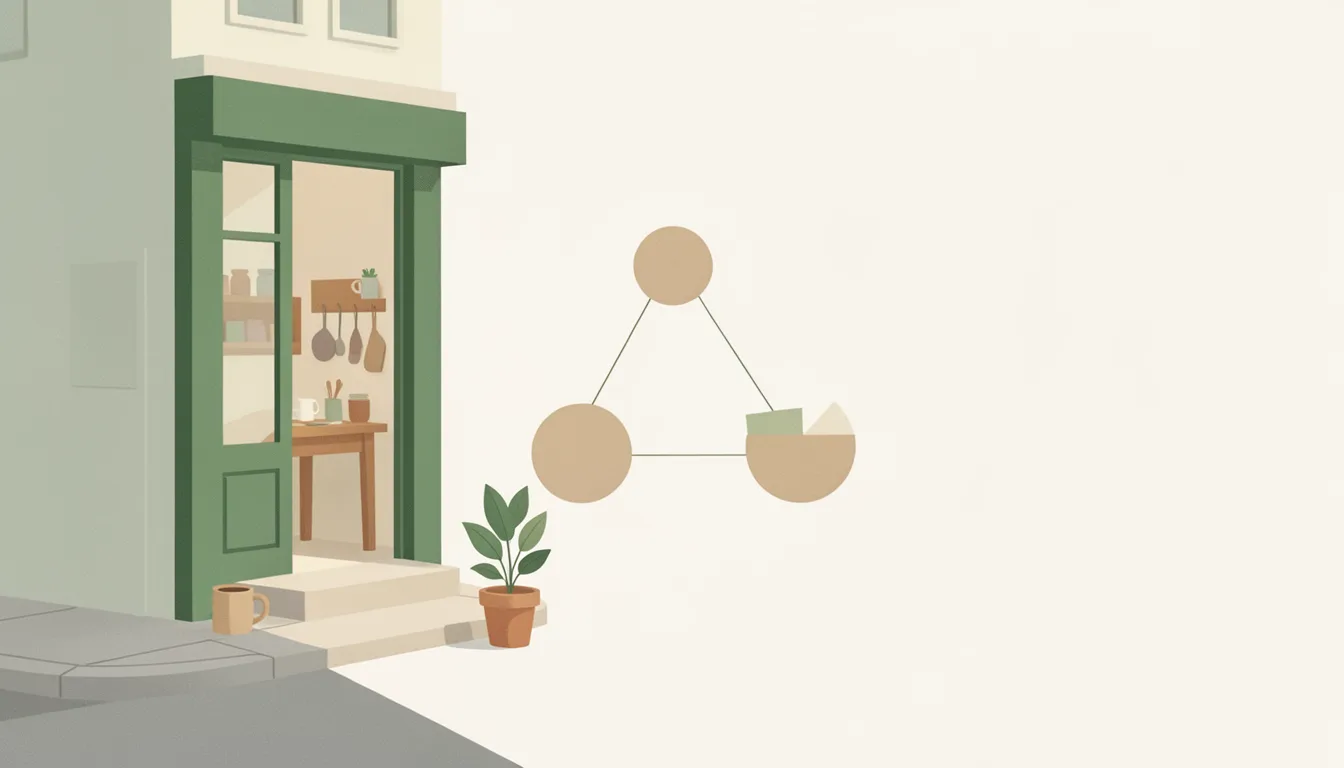
Do not start with a tool. Start with a short inventory of recent work. List every recurring task, the hours it took, and the decision it protected. Then sort the tasks into Inside, Outside, and Connector.
- Inside: keep the final call. Write down the few decisions only you should make, such as pricing, quality, and what you refuse to ship. Done means a short list you can read quickly, with no delegation attached.
- Outside: buy execution. Name the tasks that need specialist skill but not your taste. The paid task is done when it has a clear deliverable, a deadline, and a way to check the work. If the task changes product direction, it belongs back inside.
- Connector: let AI coordinate the seam. Use AI to track the outside work and the follow-ups that come with it. The finished state is a single list that shows what is owed, what is due, and what needs your judgment.
Check the handoff weekly. Spend a set block reviewing what AI tracked, what specialists delivered, and what still needs your call. The weekly note names keep items, buy items, and hand-to-AI items.
If you let AI make the final call, the judgment moves to a system you cannot fully inspect. Keep the decision inside. Let the assistant carry the paperwork.
Hours decide the margin
Most solo operators scale by adding tasks, not by adding margin. The boundary map forces a different question: does this use of time protect the work you are paid to do? If it does not, buy it or automate it.
When a task is ambiguous, ask what would make it safe to hand off. You need a clear input, a clear output, and a clear way to reject the result. Without a defined rejection path, keep it inside for now.
Use the map to set a weekly hour budget. Keep the judgment work inside a fixed block. Buy execution when the specialist is faster and the deliverable is clear. Give AI the coordination when the task is repetitive but easy to get wrong.
Count the hours first. When the specialist's rate is lower than the value of the hours you save, buy it. Done looks like a small setup: a list of inside calls, a list of outside vendors, and a list of AI-tracked follow-ups. Review it weekly, and adjust the boundary when the hours change.